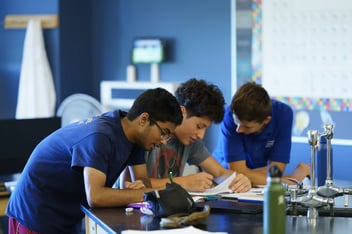
The transition from elementary to middle school can feel like a big leap for boys—and their parents. Academic expectations increase, social dynamics shift, and early adolescence brings emotional and developmental changes that are not always easy to navigate.
While this stage can be challenging, the transition from elementary to middle school can also be a powerful time for growth. When boys have the right support at home and at school, they learn to navigate these changes with confidence.
Why the Transition From Elementary to Middle School Is Challenging for Boys
For many boys, middle school feels harder than elementary school. Not because they are incapable of handling these new challenges, but because they are facing so many changes all at once. The structure boys relied on in elementary school is no longer present, and new expectations for time management, behavior, and executive function appear before those skills are fully developed.
Increased Independence and Responsibility
As they transition to middle school, one of the biggest adjustments boys face is the sudden increase in independence. Middle school students are expected to take ownership of daily responsibilities that were often closely supported in earlier grades.
This includes things like:
-
Moving between classes on their own
-
Keeping track of assignments and due dates
-
Organizing backpacks, binders, and learning materials
For boys who are still developing planning and organization skills, this shift can take additional time to master. Viewing these challenges as opportunities for learning new skills can help your son take the same perspective.
Developmental and Emotional Changes
At the same time, boys are experiencing significant physical, emotional, and cognitive growth. These changes can show up in everyday life in ways parents might not expect.
During this stage, boys may:
-
Feel unsure of themselves one day and confident the next
-
Struggle to regulate emotions or manage frustration
-
Become more sensitive to feedback from adults and peers
These changes are a normal part of development. While these behavior changes may present difficulties in the moment, parents who understand the behavior as part of adolescence can respond with patience and perspective.
Academic Adjustments Boys Face in Middle School
Academically, the transition from elementary to middle school introduces a more complex and demanding learning environment. Boys are asked to manage not only more work, but different types of work. Lab reports, essays, and more complex forms of homework can present new challenges.
Managing Multiple Classes and Teachers
Instead of working primarily with one teacher, students rotate through several classes each day.
This instruction change means boys must learn how to adjust to:
-
Different teaching styles and classroom expectations
- Varied grading systems and assessment methods
- Long term assignments that require planning over weeks (rather than days)
As a result, skills like time management and self advocacy become just as important as understanding the material itself.
Social and Emotional Changes During the Middle School Years
Social development takes on a larger role during middle school as boys begin to think more about belonging, identity, and peer relationships.
Navigating Peer Relationships and Social Pressure
Friendships often change as students meet new classmates and expand their social circles. Boys may feel pressure as they try to figure out where they fit with their peers.
Common challenges during this time include:
-
Shifting friend groups or social roles
-
Increased comparison with peers
-
New conflicts or misunderstandings
These experiences can be stressful, but they also help boys develop important social skills over time. At BC High’s Arrupe Division, our academic programming encourages middle school boys to build strong bonds, accept others, and establish lifelong friendships.
How Parents Can Support Their Son During the Transition
Parents remain one of the most important sources of stability during the transition from elementary to middle school. While boys become more independent, they still benefit from consistent guidance, encouragement, and support from their family.
Encouraging Open Communication
As boys navigate new challenges, open communication helps them feel supported. While adolescent boys may not always want to talk, parents can demonstrate that they’re available and ready to listen when the time is right.
Parents can create space for conversation by:
-
Asking open ended questions about school and friendships
-
Listening without rushing to fix every problem
-
Reassuring boys that challenges are a normal part of growing up
This approach builds trust and helps boys develop emotional awareness and confidence.
The Role Schools Play in Supporting Middle School Transitions
Schools also play a large role in helping boys adjust to middle school. By providing structure and strong relationships, middle schools like BC High’s Arrupe Division support boys as they transition from elementary school.
Advisory Programs and Mentorship
At the BC High Arrupe Division, advisory programs connect students with trusted adults who guide them throughout the year. Our advisory programs help make sure an adult is regularly checking in with students to support them as they grow, learn, and develop the skills they need to thrive in middle school.
These relationships give boys a consistent point of support for:
-
Academic check-ins and goal setting
-
Social or emotional concerns
-
Guidance on how to navigate challenges independently
Extracurricular and Leadership Opportunities
Like our high school, BC High’s Arrupe Division is guided by the Jesuit concept of cura personalis–care for the whole person. We recognize that opportunities outside the classroom are just as important as academics for holistic development.
Activities such as athletics, clubs, and leadership programs help boys:
-
Build confidence in new settings
-
Develop friendships and teamwork skills
-
Feel connected to the school community
Choosing the Right Middle School Environment in Boston
This transition from elementary to middle school is an important one, and choosing the right middle school environment matters. The right fit can make a meaningful difference in how boys experience these years.
Experience Supporting Boys in Early Adolescence
Boys in early adolescence have unique needs. A one-size-fits-all approach to learning and skill development isn’t the best approach for boys at this age. Schools that understand boys’ developmental needs and have the capacity to provide personalized support are better prepared to support them during this stage.
When evaluating schools, families should look for schools that offer:
-
Faculty experienced in working with early adolescents
-
Clear academic expectations paired with consistent support
-
Strong communication between the school and families
Helping Boys Build Confidence and Independence
Middle school is more than a stepping stone to high school. It is a time when boys begin to see themselves as capable, independent learners. At BC High, we know this lifestage is incredibly important for boys, and our approach to learning is specifically designed to offer a carefully calibrated balance of challenge and support.
Encouraging Accountability and Effort
Clear expectations help boys understand how they need to show up in the classroom, on the field, or in a club meeting. At BC High, our faculty make a consistent effort to communicate expectations clearly and regularly, while also explaining why these expectations matter. Over time, consistent routines and follow-through help reinforce boys’ responsibility and self-confidence.
Learning From Challenges and Setbacks
During the transition from elementary to middle school, challenges and mistakes are inevitable. When boys are encouraged to reflect, adjust, and keep going, setbacks become opportunities to build resilience and problem-solving skills. Guidance from faculty and advisors helps students learn from their mistakes and move forward.
Learn More About How BC High’s Arrupe Division Supports Middle School Learners
The transition from elementary to middle school is a formative period for boys academically, socially, and emotionally. With thoughtful parental involvement and a school environment designed to support early adolescence, students can grow into confident, capable learners.
Interested in learning how BC High’s Arrupe Division supports boys through the transition from elementary to middle school?
Visit our campus and experience BC High in person. Visiting offers the opportunity to experience the learning environment firsthand, meet faculty, and see how strong relationships and intentional support help students thrive.